 |
| Add caption |
Another idea would be to have students set up a separate Instagram from their personal account that is just for school. I like to show examples of quality student work in my class, and if I were to post them on Instagram this would be a great place for students to refer back to these examples. This could be done on Twitter, but students seem to be much more interested in Instagram than Twitter.
Participatory Digital Citizenship
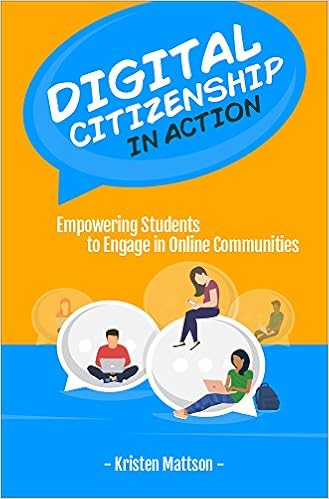 When schools are tasked with teaching children about digital citizenship, it is easy to go down the path of telling them what they should not do and warning them about all of the dangers. In Kristen Mattson's book Digital Citizenship in Action: Empowering Students to Engage in Online Communities, she provides several methods of taking digital citizenship to the next level. The chapter that stood out to me the most was titled "Making Contributions that Matter." This chapter discussed the difference between traditional digital citizenship and participatory digital citizenship, which encourages students to use their online activity to make an impact. She discusses how she transformed a project where students would practice their writing by mailing letters to celebrities, who would occasionally respond, into a project that gave back to the community. Students were tasked with raising money to purchase clothes for children in need, and to do this they emailed businesses in the community and promoted the fundraiser on social media. Reading this gave me the idea to do something similar in my school, where students would use the same methods of raising funds for the humanitarian crisis in Yemen. I brought up this idea to the Language Arts teachers, and we came up with a project for their students to do that would encourage participatory digital citizenship. Each student will be researching different charities that support a cause that is meaningful to them. Since some charity organizations only give a fraction of the money they earn to the cause they're supporting, students have to vet any organization they choose to raise funds for it to make sure the money they raise is going where they want it to. This is a valuable skill that not money adults consider before donating money. Students will raise money by starting an online campaign to reach family and friends, as well as emailing different businesses throughout the community to see if they are willing to donate. This is one example of using social media in education for positive change, and I can't wait to see how it turns out.
No comments:
Post a Comment